
Introduction
Edge Computing represents the next frontier in data processing. As billions of devices connect to the network (the IoT), the traditional centralized cloud architecture faces serious challenges regarding latency and bandwidth.
Edge Computing is a distributed computing paradigm that brings processing and data storage capabilities closer to the source of information, meaning closer to the customer or the device. This evolution is essential to ensure the immediacy, efficiency, and security of critical real-time applications.
Challenges of Centralized Cloud: The Need for the Edge
Traditionally, all data travels to a remote data center (the “cloud”) to be processed. This physical distance creates insurmountable problems for modern operations:
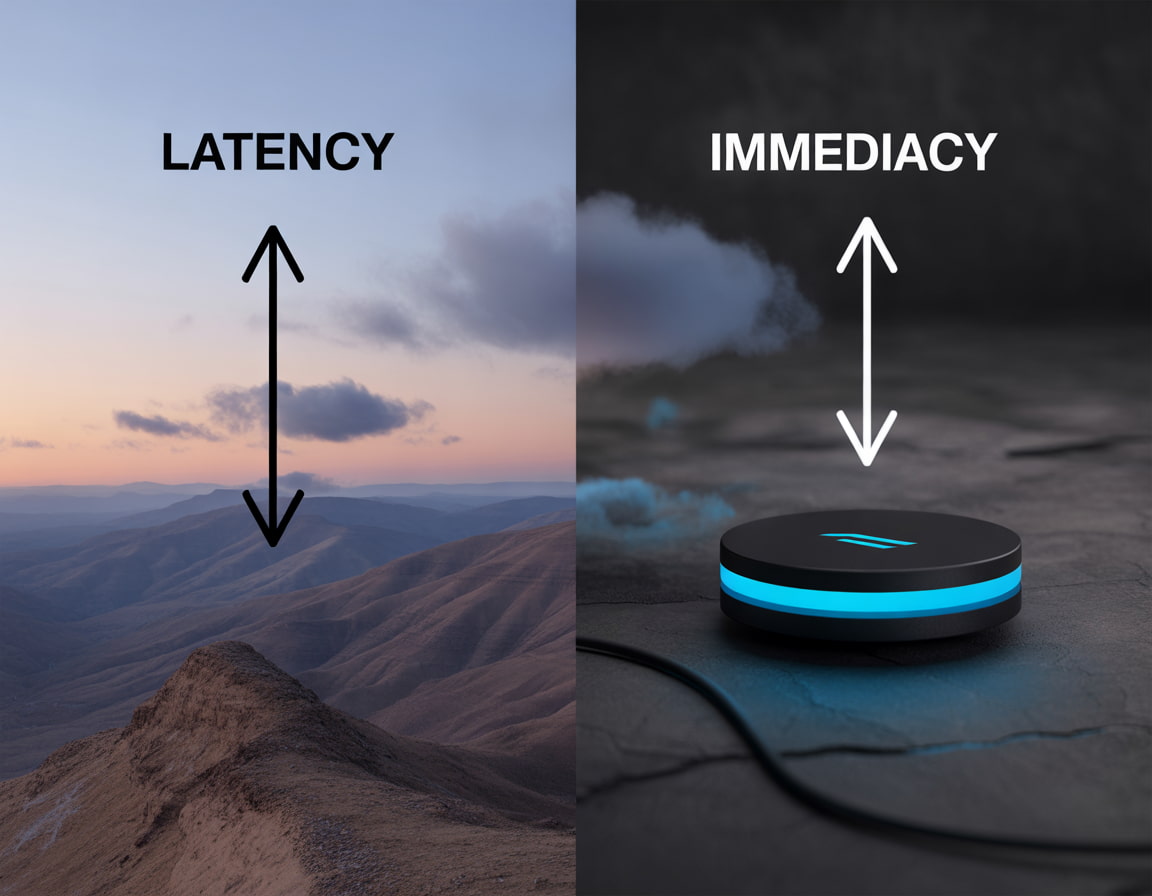
- Unacceptable Latency: The round trip of data (from the device to the cloud and vice versa) generates a delay (latency) that is critical in applications like autonomous vehicles or remote surgery.
- Bandwidth Congestion: The volume of data produced by the IoT is so massive that transferring all of it to the cloud is unfeasible and creates network bottlenecks.
- Transfer Costs: The constant sending of large volumes of data to the cloud involves high bandwidth costs that Edge Computing helps mitigate.
Edge Computing solves these challenges by distributing intelligence so that decisions are made at the point of action, driving true digital transformation.
Edge Manifesto: The 5 Pillars of Immediacy and Value
Edge Computing is not just a technological solution; it is an imperative for speed. The customer experience in the digital age is defined by immediacy, and the Edge guarantees it through these five pillars of value:
Pillar 1: Ultra-Fast Execution (The End of Latency)
Edge enables local processing for immediate responses, crucial in applications where every millisecond counts.
Example: In remote assisted surgery or autonomous vehicles, the Edge processes traffic and sensor data without relying on the cloud. This ensures immediate security and functionality, making real-time critical operations viable.
Pillar 2: Localized Hyper-Personalization
By processing interaction data on location, organizations can generate personalization at a micro-scale.
Example: In Retail and Smart Stores, shops analyze in situ buying patterns to send personalized offers to a customer’s phone exactly when they are in front of a specific shelf, instantly elevating the customer experience.
Pilar 3: Frictionless Immersion (AR and Gaming)
Augmented Reality (AR) and high-end video game streaming require ultra-low latency to be believable.
Example: Edge Computing hosts graphic rendering or parts of the game on proximity servers. This eliminates lag, ensuring that the interaction is fluid and more immersive for the end user.
Pilar 4: Operational Resilience (Offline First)
Edge ensures system reliability, even in environments with limited or no connectivity, guaranteeing business continuity.
Example: A wind turbine in a remote park or an offshore platform can continue diagnosing its failures and adjusting its operation without a constant connection to the cloud, prioritizing local functionality.
Pilar 5: Data Sovereignty and Security Shielding
Local processing of sensitive data minimizes its exposure to public networks and strengthens regulatory compliance.
Example: In sectors like healthcare, Edge allows for data anonymization or filtering before it leaves the hospital or clinic. This reinforces privacy and compliance with security regulations.
Edge Computing and the IoT Explosion
The adoption of Edge Computing is a direct response to the exponential growth of the Internet of Things (IoT). It is estimated that by 2025, there will be more than 41 billion IoT devices generating data.
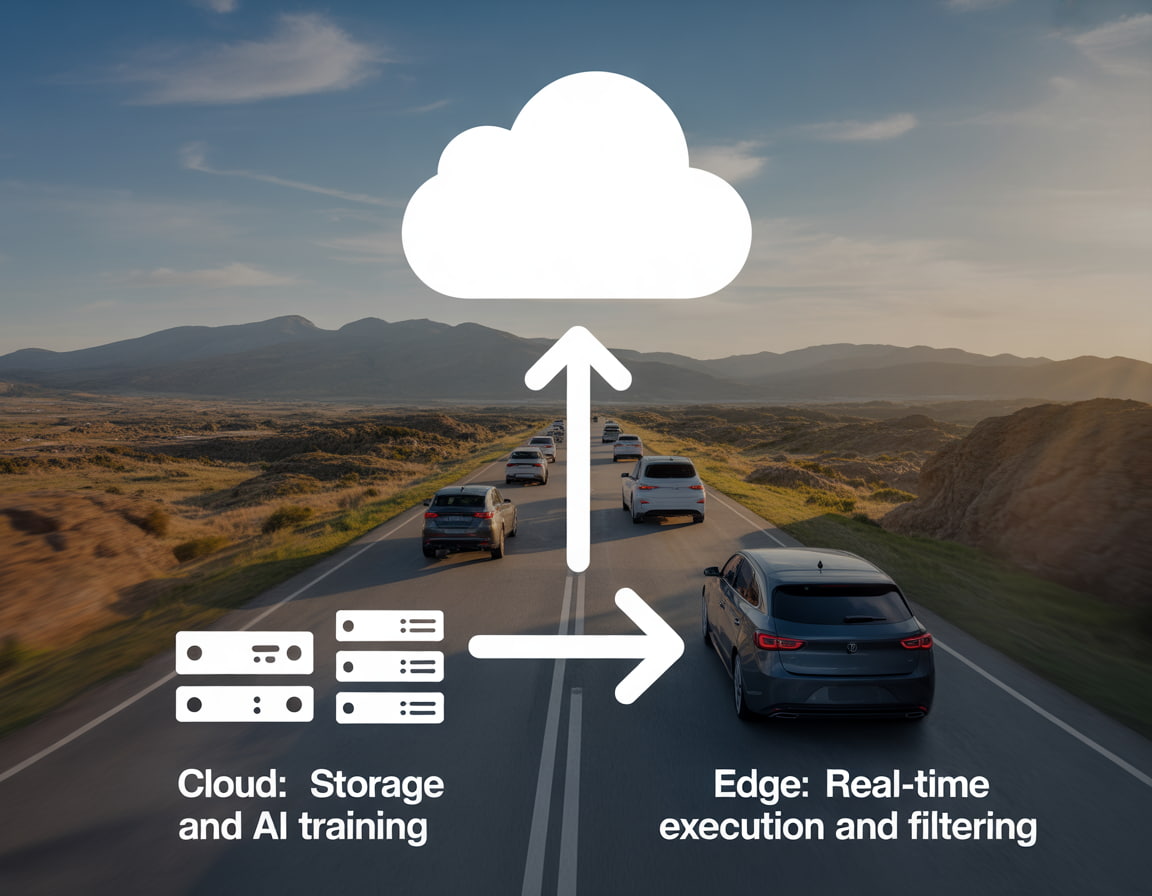
The volume of data produced is so massive that transferring all of it to the central cloud is unfeasible and costly. Edge alleviates this congestion by performing pre-computation and sending only critical data to the cloud for long-term storage or macro-analysis. This optimizes bandwidth usage and drastically reduces transfer costs.
The Hybrid Model: Edge and Cloud as Partners
It is crucial to understand that Edge Computing does not replace the Cloud; it complements it. Together, they form a distributed hybrid computing model.
- Edge: Handles immediacy, execution, and real-time data filtering.
- Cloud: Handles massive storage, macro analysis (e.g., Big Data), and training of Artificial Intelligence (AI) models.
The Edge acts as the “fast brain” that filters and executes, while the Cloud is the “long-term brain” that learns and stores accumulated knowledge.
Conclusion
Edge Computing is not just a technological trend; it is a fundamental requirement for the future of connectivity and innovation. By bringing data processing closer to the source, latency bottlenecks are eliminated, security is improved, and most importantly, a fluid, immediate, and secure customer experience is guaranteed, from the autonomous vehicle to retail.
The customer today demands immediacy, and the Edge is the architecture designed to deliver it.
We are experts in helping organizations navigate the transition to distributed computing architectures that optimize the customer experience. If your company relies on real-time decision-making, operates in environments with limited connectivity, or handles large volumes of sensitive data, you need a robust Edge strategy. In LMA Group, we can help you.
Perhaps you are interested in the following topic:
Case Study: How 24/7 Support Transformed an E-Commerce Brand’s Customer Experience.
Contact Us
Ready to transform your operations
Your inquiry goes straight to our digital strategy team. No spam. Just smart solutions.