
Introduction
In the telecommunications industry, churn (or attrition rate) is not just a metric; it is the thermometer that measures a company’s survival. With saturated markets and fierce competition, retaining an existing customer is up to five times cheaper than acquiring a new one.
Today, we explore how the implementation of a Predictive Analytics model transformed the retention strategy of a telecom giant, allowing them to act before the customer even considered the competition.
The Challenge: Silence Before the Departure
Our client, an operator with an international presence, faced a worrying reality: an annual loss of 15% of its subscriber base. The most frustrating part was not the figure itself, but the lack of visibility.
Historically, the company used a reactive approach:
- Exit Surveys: Data that arrived when the customer had already signed with another operator.
- Generic Offers: Massive discounts that eroded profit margins without attacking the root cause.
- Basic Segmentation: Based solely on Demographics (age, location), ignoring actual user behavior.
The goal was clear: identify abandonment patterns 30 days in advance to execute hyper-personalized retention campaigns.
The Solution: From Data to Predictive Behavior
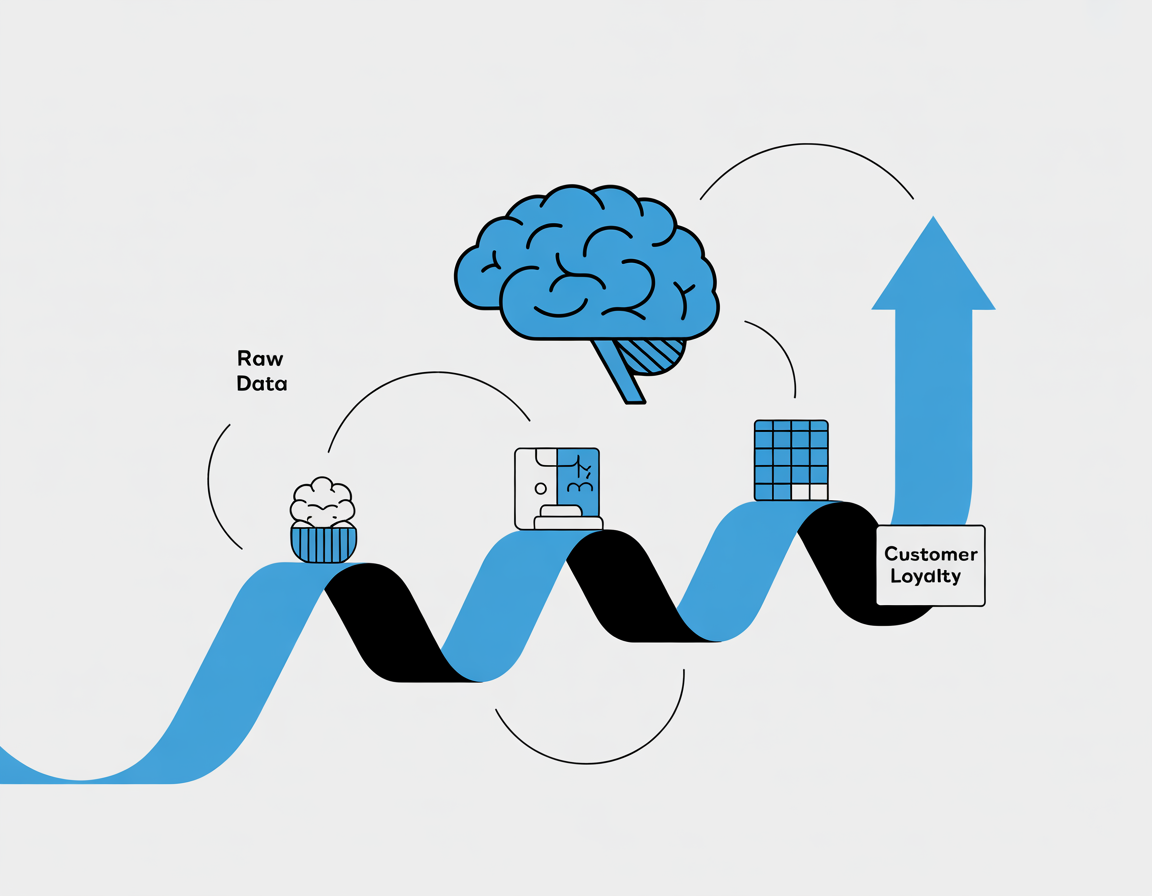
To solve this puzzle, we moved from descriptive analysis (“what happened?”) to predictive analysis (“what will happen?”). The key lay in integrating data silos that previously did not communicate with each other.
1. Data Collection and Cleaning (Data Engineering)
Not all data is created equal. For this model, we fed the algorithm with four critical dimensions:
- Service Usage: Sudden drops in data consumption, voice minutes, or roaming frequency.
- Support Interactions: Number of calls to the call center, technical complaints, and chat sentiment processed through Natural Language Processing (NLP).
- Billing Data: Payment delays, plan changes, or expiration of loyalty contracts.
- Competition: Aggressive offers in the customer’s zip code.
2. Model Selection
We used an ensemble of Machine Learning models, primarily Random Forest and XGBoost, due to their ability to handle non-linear relationships and complex categorical variables.
Technical Note: The model was trained to assign a “Risk Score” from 0 to 100 to each customer on a weekly basis.
The Implementation: From Theory to Action
A predictive model is useless if the marketing team doesn’t know what to do with it. This is where analytics turned into business strategy.
Risk and Value Segmentation (LTV)
Not all customers who want to leave deserve the same retention effort. We crossed the probability of leakage with the customer’s Customer Lifetime Value (LTV):
1. Segment: Diamond at Risk
- Risk: High.
- Customer Value: Very High.
- Strategic Action: Personalized call + Free service upgrade.
2. Segment: Standard User
- Risk: Medium.
- Customer Value: Medium.
- Strategic Action: Automatic discount coupon or extra data package.
3. Segment: Low Value / High Risk
- Risk: High
- Customer Value: Low.
- Strategic Action: Do not intervene (Let churn occur to optimize resources).
The Retention “Trigger”
When a customer exceeded the 75% churn probability threshold, an automated flow was activated in the CRM. If the cause detected by the model was “recurring technical problems,” the message was not a discount, but a priority call from the technical team to solve the problem at its root.
Results: The Impact on the Bottom Line
After 12 months of implementation, the results exceeded initial projections, validating the investment in AI and advanced analytics:
- Churn Reduction: A net decrease of 22% in the voluntary cancellation rate was achieved.
- Marketing Cost Savings: By stopping massive discounts to customers who did not intend to leave (false positives), the cost of retention campaigns fell by 30%.
- NPS Increase: Customers felt that the company anticipated their needs, improving brand perception.

Conclusion: The Future is Proactive
This success story demonstrates that data is a telecom company’s most valuable asset, but only if it is transformed into actionable decisions. Predictive analytics is not a crystal ball; it is a microscope that allows you to see the cracks in the customer relationship before the structure collapses.
At LMA Group, we understand that every percentage point of recovered churn translates directly into profitability and sustainable growth. The question is no longer whether you can afford to implement advanced analytics, but whether you can afford to continue operating blindly.
Is your company losing customers and you don’t know why?
At LMA Group, we help organizations turn their data into high-impact retention strategies.
You may also be interested in:
Global Expansion Strategies: Entering New Markets Successfully.
Contact Us
Ready to transform your operations
Your inquiry goes straight to our digital strategy team. No spam. Just smart solutions.