

Introduction
Customer satisfaction is the heartbeat of any successful business. In an era where customers have endless choices and little patience, measuring how satisfied they are with your brand is not just a best practice — it’s a survival strategy. The Customer Satisfaction Score (CSAT) has become one of the most widely used metrics to evaluate customer experience (CX).
But measuring CSAT is only the first step; the real value comes from using those insights to drive continuous improvement.
What Is CSAT and Why It Matters
CSAT is a simple yet powerful metric that asks customers to rate their satisfaction with a product, service, or interaction. Typically measured on a scale of 1–5 or 1–10, it provides a snapshot of how customers feel at a specific moment.
Why it matters:
- Direct link to loyalty: Satisfied customers are more likely to return and recommend your brand.
- Early warning system: Low CSAT scores highlight pain points before they escalate into churn.
- Benchmarking tool: CSAT allows companies to compare performance across teams, regions, or time periods.
How to Measure CSAT Effectively
Collecting CSAT data requires more than sending out a survey. To get meaningful insights:
- Ask at the right time: Immediately after a customer interaction, purchase, or support resolution.
- Keep it simple: One or two questions are enough to avoid survey fatigue.
- Use multiple channels: Email, in‑app pop‑ups, SMS, or chatbots.
- Segment responses: Analyze by product line, geography, or customer type to uncover patterns.
Example: A global SaaS company embedded a one‑question CSAT survey at the end of every support chat. This increased response rates by 40% compared to email surveys sent days later.
Beyond the Score: Understanding the “Why”
A number alone doesn’t tell the full story. To truly improve CX, companies must dig deeper:
- Open‑ended feedback: Ask customers to explain their rating in their own words.
- Text analytics: Use AI to identify recurring themes in comments.
- Agent coaching: Share feedback directly with frontline teams to reinforce strengths and address weaknesses.
Turning Insights into Action
Collecting CSAT data is only valuable if it leads to change. Best practices include:
- Close the loop: Reach out to dissatisfied customers to resolve issues and rebuild trust.
- Prioritize improvements: Focus on the areas with the biggest impact on satisfaction.
- Track progress: Monitor CSAT trends over time to measure the effectiveness of changes.
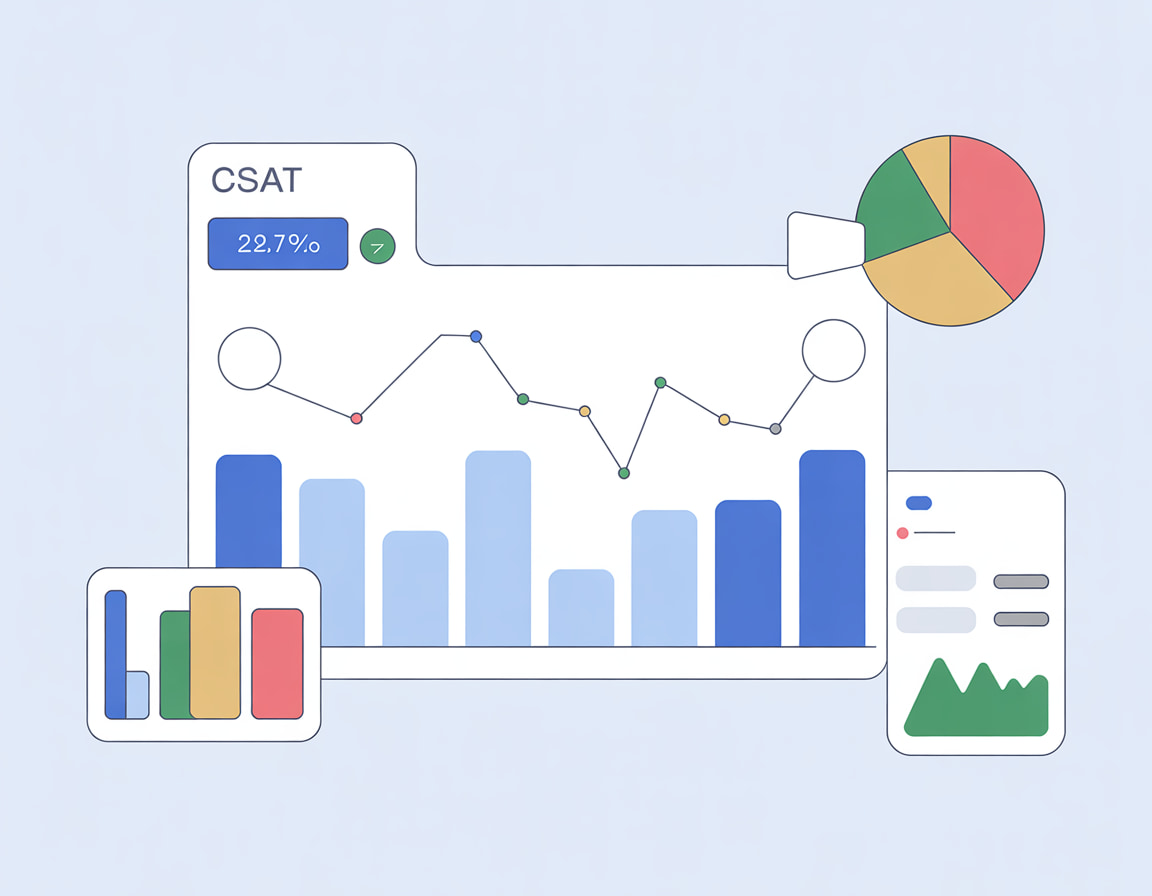
Case example: An e‑commerce retailer noticed low CSAT scores related to delivery delays. By partnering with a new logistics provider and proactively updating customers on shipping status, they improved CSAT by 18% in three months.
Complementing CSAT with Other Metrics
While CSAT is valuable, it should not be the only measure of CX. Consider combining it with:
- Net Promoter Score (NPS): Measures customer loyalty and likelihood to recommend.
- Customer Effort Score (CES): Evaluates how easy it is for customers to get their issues resolved.
- Churn rate: Tracks how many customers stop doing business with you.
Together, these metrics provide a holistic view of customer health.
The Role of Technology in CSAT Improvement
Modern tools make it easier to measure and act on CSAT data:
- AI‑driven analytics: Identify sentiment and trends across thousands of responses.
- Real‑time dashboards: Give managers instant visibility into performance.
- Automation: Trigger follow‑up actions when scores fall below a threshold.
Building a Customer‑Centric Culture
Ultimately, improving CSAT is not just about surveys or dashboards — it’s about culture. Companies that consistently deliver high satisfaction share common traits:
- Leadership commitment: Executives champion CX as a strategic priority.
- Employee empowerment: Frontline staff are trained and trusted to solve problems.
- Continuous learning: Feedback is used to refine processes and innovate.

Conclusion
Measuring CSAT is the first step toward understanding your customers, but the real impact comes from acting on those insights. By combining data with empathy, technology with human touch, and short‑term fixes with long‑term cultural change, companies can transform customer satisfaction into a powerful driver of loyalty and growth.
Are you ready to measure and improve customer satisfaction in your organization? Fill out the form at the end of this article, and the LMA Group team will help you design a CSAT strategy that delivers measurable results.
You may also be interested in:
The Impact of 24/7 Support on Customer Satisfaction
Contact Us
Ready to transform your operations
Your inquiry goes straight to our digital strategy team. No spam. Just smart solutions.