

Introduction
In a global market where products and services are rapidly becoming commoditized, the only sustainable differentiator left for your company is the Customer Experience (CX). This is no longer a support function but the heart of the business strategy and the main source of recurring revenue.
The CX of the future is built by integrating the efficiency of Artificial Intelligence with the human and emotional component to generate a lasting and profitable connection.
CX as Strategic Value, Not Operational Cost
Today’s company must view investment in CX not as an operational cost, which is why it shouldn’t focus only on the efficiency of customer support. On the contrary, leading organizations understand that every touchpoint is an opportunity for investment that generates loyalty and Lifetime Value (LTV). A well-designed CX strategy reduces friction and, therefore, the long-term cost of service.
- Studies like those by Forrester indicate that companies that invest in CX achieve 5.7 times greater revenue growth than those that do not.
- Financial services companies are using Net Promoter Score (NPS) and Customer Effort Score (CES) as primary metrics to drive their corporate strategy, demonstrating their impact on market performance and investor confidence.
Emotional Design and Critical Moment Mapping
The Customer Experience is defined by the emotional peaks and valleys of the user journey. An effective CX strategy focuses on mapping these Moments of Truth (MoT) and amplifying the sense of value, especially when the customer feels vulnerable.
- We identify the points where the customer experiences frustration (e.g., when managing a return) or unexpected delight (the delight factor).
- The goal is to design service solutions that generate a positive surprise (the delight factor).
Example: Claims management in airlines that compensate proactively, transforming a negative experience into a loyalty story.
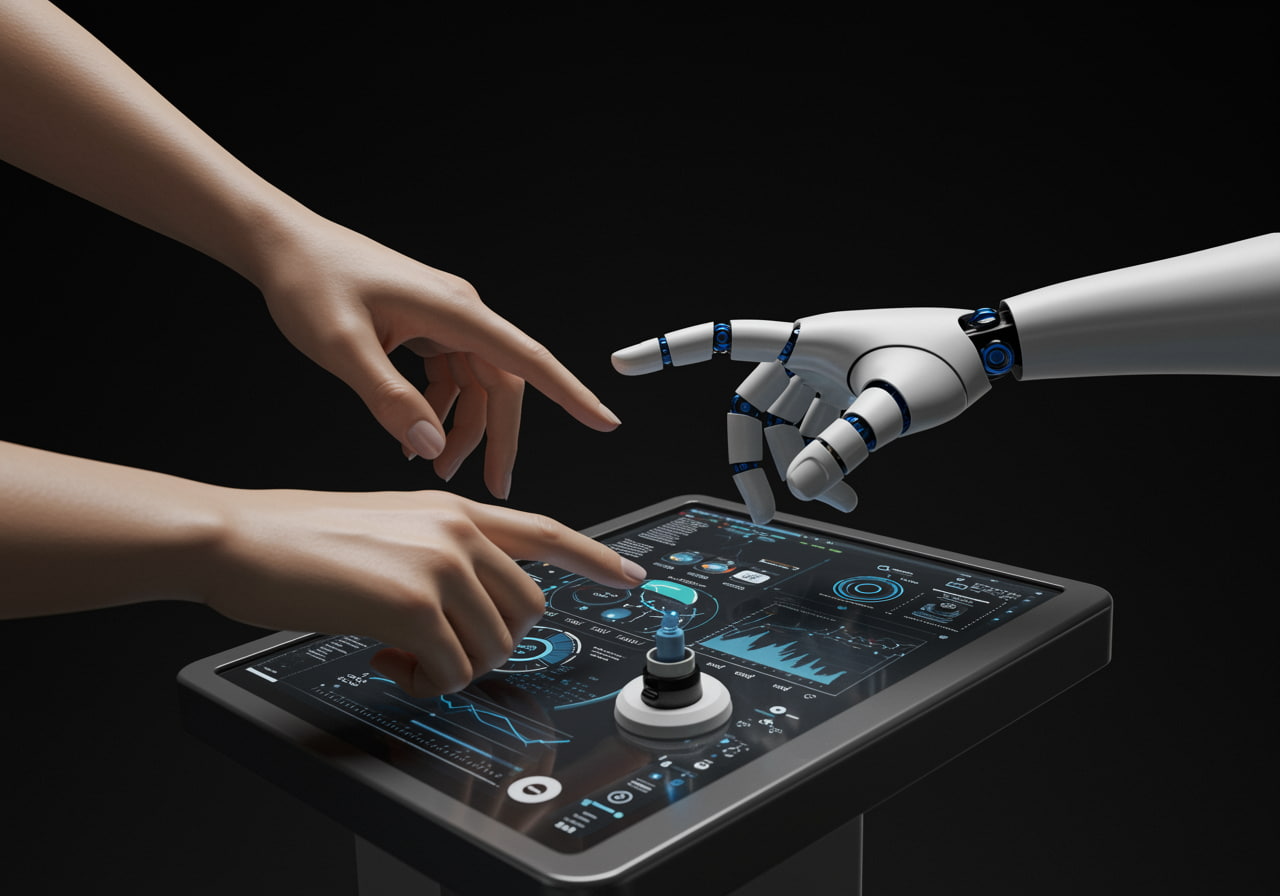
Predictive AI: From Reactivity to Customer Anticipation
Artificial Intelligence (AI) and Machine Learning are enabling companies to move from being mere responders in customer support to true anticipators of customer needs.
- Algorithms analyze interaction history, usage patterns, and purchase data to predict when and why a customer might experience a problem or abandon the platform (churn).
Case example: A SaaS company uses AI to detect when the usage rate of a key feature by an enterprise customer drops below a threshold, triggering an alert for a personalized intervention by the account manager before the problem is verbalized. The AI is based on Predictive Analytics.
The Support Ecosystem: Integrating BPO and Strategic Outsourcing
Global scale demands operational flexibility that is often achieved through BPO (Business Process Outsourcing) and outsourcing of customer support. The CX strategy must guarantee that emotional quality and consistency are maintained, regardless of who is managing the interaction.
- It is crucial to view BPO partners not as mere low-cost call centers, but as strategic extensions of the brand’s own culture.
- Conversational AI and voice analytics platforms must be implemented to monitor the emotional quality of interactions in real-time, ensuring that the script of the global strategy is consistent. Business Process Outsourcing is the key.
Hyper-Personalization at Global Scale
In a hyperconnected world, the customer expects the brand to recognize them uniquely, regardless of the channel or geography. This requires a unified data infrastructure, assisted by AI.
- The global strategy must unify customer data from e-commerce, apps, and call centers to create a complete 360-degree view.
Example: An Accenture report revealed that 75% of consumers are more likely to buy from a company that:
- Recognizes them by name.
- Recommends options based on previous purchases.
This is achieved thanks to Big Data and advanced analytics.
The Augmented Agent: Uniting Humans and Bots
High-level CX is not a choice between humans and bots, but a smart integration of both. AI must act as an “augmented agent,” enhancing the capabilities of customer support professionals.
- Chatbots handle routine inquiries (80% of cases), while AI assists human agents with complex inquiries.
Example: A support system for a financial technology company uses AI to scan the customer’s profile and ticket history in real-time, offering the human agent instant and personalized resolution suggestions, allowing them to focus on empathy and value creation.

CX as a Driver of Innovation and Retention
Customer feedback is the most valuable asset for continuous innovation. CX should not only serve the customer but also directly feed back into the product teams.
- AI-assisted feedback loops must be established to analyze the Voice of the Customer (VoC) and transform recurring complaints into product development priorities. This is known as Voice of the Customer.
By demonstrating that the company listens and acts, confidence is strengthened and churn is reduced, which, according to Bain & Company, costs up to seven times more than retaining a customer.
Conclusion
The Economy of Empathy is the new frontier. By designing a Customer Experience that is simultaneously efficient (thanks to AI, analytics, and BPO) and profoundly human (thanks to emotional design), your company not only secures loyalty but builds a practically insurmountable competitive barrier.
At LMA Group, we are experts in mapping your customers’ emotional journey and integrating technological solutions that transform CX into your most powerful growth engine. If you are ready for your business strategy to focus on creating memorable experiences, contact us. Let’s design your emotional advantage.
You may also be interested in:
Contact Us
Ready to transform your operations
Your inquiry goes straight to our digital strategy team. No spam. Just smart solutions.